
From Comparison to Confidence: A Parent’s Guide to Grounding Techniques for Teens
- resilientfuturesco
- Apr 8, 2025
- 5 min read

We all want the best for our teenagers. We want them to grow up confident in themselves, proud of who they are, and strong enough to stay true to their values. But raising teens in today’s world comes with a unique set of challenges - one of the most significant being social pressure. The teenage years are full of intense social comparison. Whether it’s through social media or everyday peer interactions, teens are constantly evaluating how they measure up to others. This can create overwhelming pressure to fit in, look a certain way, or behave in ways that go against their true selves.
So, how do we support our teenagers to stay grounded and authentic amidst this constant noise?
One effective and accessible tool is grounding techniques - strategies that help teens reconnect to the present moment, reduce anxiety, and build the inner strength needed to resist the pressure to conform.
In this blog, we’ll explore:
What social pressure looks like for teens today
The impact of social comparison and peer influence
How grounding techniques work
Practical grounding tools you can teach your teen
Why confidence and self-esteem are key to resilience
Understanding Social Pressure in Teenagers
Teenagers are wired for connection. Their brains are in a stage of development where peer relationships and social validation become central to their identity. While this is a natural part of growing up, today’s social environment - especially with the presence of smartphones and social media - has intensified that need for approval.
From Instagram to TikTok, from group chats to online gaming platforms, teens are constantly immersed in a world where likes, views, appearance, and popularity seem to define their worth. And it’s not just online - pressure can come from school friends, teammates, classmates, or even from unrealistic academic expectations.
Social pressure may lead to:
People-pleasing behaviours
Poor decision-making (e.g. risky behaviour, substance use)
Low self-esteem
Fear of rejection or exclusion
Constant comparison and self-criticism
Suppression of personal interests or values to "fit in"
When teens don’t feel confident in who they are, they’re more likely to follow the crowd - even when that crowd is heading in a direction that doesn’t feel right to them.
Why Social Comparison Hurts Self-Esteem
Social comparison is human - it’s how we understand ourselves in relation to others. But for teenagers, whose sense of identity is still forming, constant comparison can be damaging.
Teens often compare:
Physical appearance
Academic achievement
Athletic ability
Popularity or friendship groups
Lifestyles and material possessions
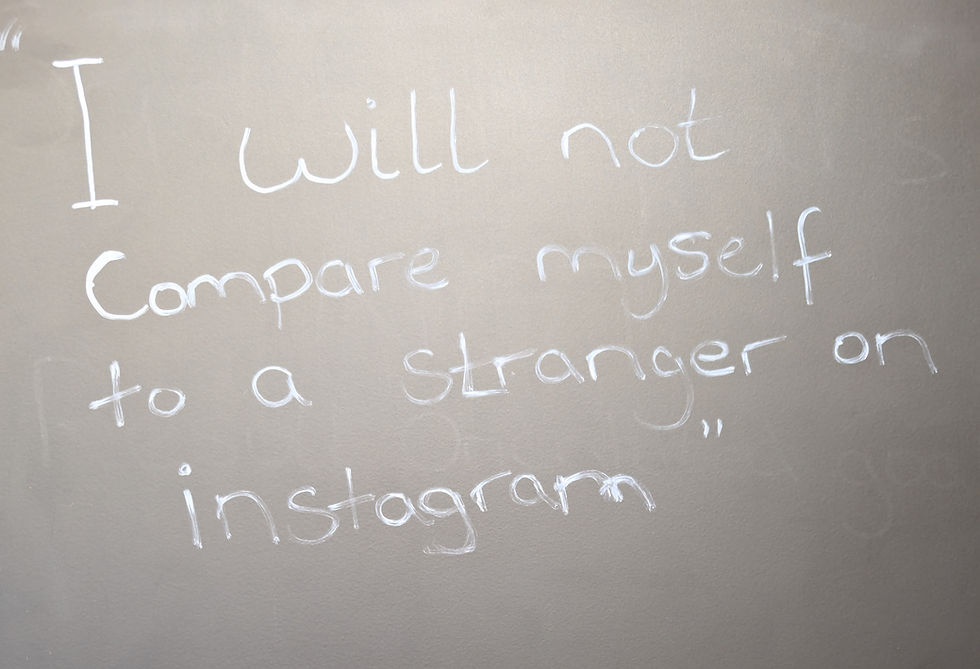
Unfortunately, most of these comparisons are made against curated, filtered, and often unrealistic versions of others - particularly online. This creates a distorted sense of reality, leaving teens feeling that they’re not good enough, not doing enough, or not measuring up.
Over time, this erodes self-esteem and creates anxiety, shame, and chronic self-doubt.
How Grounding Helps
So, where does grounding come in?
Grounding techniques are simple tools that help shift a teen’s attention away from anxious thoughts or outside influences and back into the present moment. They are particularly helpful when a teen feels overwhelmed, triggered by social comparison, or consumed by thoughts of “not being enough.”
Grounding helps by:
Creating space between thought and reaction
Reconnecting the mind and body
Reducing overthinking and anxiety
Strengthening self-awareness
Building emotional regulation skills
When teens practise grounding regularly, they learn to pause, reflect, and choose their actions rather than reacting out of fear or pressure. It gives them the inner strength to resist conformity and align with their own values.
7 Grounding Techniques to Teach Your Teen
Here are 7 grounding strategies that can help your teen manage social pressure and stay connected to who they are:
1. 5-4-3-2-1 Senses Technique
This classic mindfulness tool helps shift focus from anxious thoughts to physical surroundings. Ask your teen to name:
5 things they can see
4 things they can touch
3 things they can hear
2 things they can smell
1 thing they can taste
It’s quick, calming, and can be done anywhere.
2. Box Breathing
Used by athletes and the military to regulate stress, box breathing involves:
Inhale for 4 counts
Hold for 4 counts
Exhale for 4 counts
Hold for 4 counts
Repeat for 3–5 rounds. This slows down the nervous system and recentres focus.
3. Body Scan
Invite your teen to sit or lie down, then slowly guide their attention from their head to their toes, noticing any tension or sensations. It helps bring attention inward and away from outside noise.
4. Affirmation Cards
Encourage your teen to write or choose affirmations that resonate with them, such as:
“I am enough just as I am.”
“I don’t have to be like everyone else.”
“I trust my own path.” Reading these regularly can reinforce a strong self-identity.
5. Nature Walks Without Tech
Spending time outdoors - without phones - helps teens reconnect with the real world. Encourage them to notice details: the feel of the ground beneath their feet, the sound of birds, the colour of the sky.
6. Journalling for Clarity
Writing down thoughts, especially after moments of comparison or peer pressure, helps your teen understand their emotions and reflect on what matters to them.
Prompts like:
“What triggered me today?”
“What do I want?”
“How do I feel when I try to please others?”
These can build self-awareness and critical thinking.
7. Name the Feeling
When teens feel pressure to conform, they often experience a mix of emotions: fear, shame, excitement, or insecurity. Encouraging them to name the emotion helps them regulate it, rather than act on it.
Use a simple script like: “I feel ______ because _______.”E.g., “I feel anxious because I don’t want to be left out.”
Building Confidence & Self-Esteem: The Foundation of Resilience
Helping teens resist social pressure isn’t just about saying "no" to the crowd - it’s about saying "yes" to themselves.
Confidence and self-esteem are the foundation of resilience. When teens know who they are and believe in themselves, they’re better equipped to handle criticism, rejection, and the temptation to conform.
Here are a few ways you can support your teen’s confidence at home:
Celebrate effort, not perfection - Praise persistence, creativity, and courage - not just results.
Encourage individuality - Support hobbies, styles, and interests that may be different from the norm.
Model authenticity - Show your own vulnerability and share how you’ve handled peer pressure.
Create open communication - Let them know they can talk to you about anything without judgement.
Teach critical thinking - Help them question messages from social media, advertising, and peer groups.
Final Thoughts: Helping Teens Find Their Inner Anchor
Social pressure isn’t going away - but with the right tools, your teen can develop the strength to face it with courage and confidence. Grounding techniques are more than just calming exercises -they’re life skills that empower young people to stay centred in a fast-paced, comparison-driven world. When your teen learns to slow down, breathe, and reconnect with who they are, they’ll be better able to choose friends, goals, and paths that align with their authentic self - not just what’s popular or expected.
At Resilient Futures Coach, we specialise in helping teens build the habits, mindset, and confidence needed to thrive. If you’re looking for individual coaching or workshops to support your teen, get in touch - we’re here to help your teen build a resilient future they can be proud of.


Comments